'%3e%3cpath%20d='M706.453%20375.999C860.234%20375.999%20984.899%20291.829%20984.899%20188C984.899%2084.1703%20860.234%200%20706.453%200C552.671%200%20428.006%2084.1703%20428.006%20188C428.006%20291.829%20552.671%20375.999%20706.453%20375.999Z'%20fill='%23009B4F'/%3e%3cpath%20d='M278.447%20375.999C432.229%20375.999%20556.893%20291.829%20556.893%20188C556.893%2084.1703%20432.229%200%20278.447%200C124.665%200%200%2084.1703%200%20188C0%20291.829%20124.665%20375.999%20278.447%20375.999Z'%20fill='%23009B4F'/%3e%3cpath%20d='M141.484%20166.68C125.01%20162.158%20114.996%20158.927%20114.996%20150.529C114.996%20143.422%20122.102%20138.9%20133.085%20138.9C144.068%20138.9%20155.051%20143.099%20164.095%20150.529L164.418%20150.852L165.388%20129.855C156.666%20125.01%20147.944%20121.78%20133.731%20121.78C123.394%20121.78%20114.027%20124.364%20107.243%20129.209C99.8137%20134.378%2095.9374%20142.13%2095.9374%20151.175C95.9374%20168.941%20110.796%20176.694%20123.394%20179.924C140.192%20184.446%20151.821%20188.323%20151.821%20198.659C151.821%20207.381%20144.068%20212.872%20131.47%20212.872C118.872%20212.872%20106.274%20207.381%2096.5834%20198.013L96.2604%20197.69L94.3223%20219.979C104.336%20226.762%20116.934%20230.316%20130.501%20230.316C142.13%20230.316%20152.144%20227.408%20159.25%20221.917C167.003%20216.103%20171.202%20207.704%20171.202%20197.367C171.202%20181.862%20161.511%20171.848%20141.484%20166.68Z'%20fill='white'/%3e%3cpath%20d='M264.557%20188C264.557%20215.78%20246.467%20230.316%20225.471%20230.316C215.457%20230.316%20207.381%20226.762%20201.244%20221.271V253.896H182.186V146.976H201.244V156.02C207.704%20149.883%20216.103%20145.684%20226.763%20145.684C247.436%20145.36%20264.557%20160.22%20264.557%20188ZM245.498%20188C245.498%20172.494%20236.131%20162.158%20222.887%20162.158C214.811%20162.158%20207.058%20165.711%20201.567%20173.787V203.182C207.058%20210.288%20214.488%20213.841%20222.887%20213.841C236.131%20213.841%20245.498%20203.505%20245.498%20188Z'%20fill='white'/%3e%3cpath%20d='M352.095%20194.137H294.274C296.535%20207.058%20305.903%20213.841%20318.824%20213.841C329.807%20213.841%20337.882%20211.257%20346.604%20206.089L347.573%20222.886C339.82%20227.085%20330.13%20230.316%20317.532%20230.316C294.274%20230.316%20274.893%20215.78%20274.893%20188.323C274.893%20162.804%20294.274%20145.683%20317.209%20145.683C341.112%20145.683%20353.71%20160.22%20353.71%20181.216C353.71%20185.415%20353.064%20189.615%20352.095%20194.137ZM335.621%20178.632C335.621%20168.618%20329.161%20160.866%20317.532%20160.866C306.549%20160.866%20296.858%20168.295%20294.597%20180.893H335.298C335.621%20180.247%20335.621%20179.601%20335.621%20178.632Z'%20fill='white'/%3e%3cpath%20d='M443.189%20221.917L445.128%20203.505C452.88%20209.965%20463.54%20213.841%20474.846%20213.841C482.921%20213.841%20488.413%20210.611%20488.413%20204.797C488.413%20189.615%20444.482%20197.367%20444.482%20169.91C444.482%20153.436%20458.695%20145.36%20475.492%20145.36C487.444%20145.36%20496.488%20148.268%20503.272%20152.467L502.303%20169.587C494.227%20164.096%20484.213%20161.189%20475.492%20161.189C468.708%20161.189%20463.217%20163.773%20463.217%20168.941C463.217%20181.862%20507.471%20175.402%20507.471%20203.828C507.471%20221.271%20492.289%20229.993%20474.523%20229.993C461.602%20230.316%20450.942%20227.085%20443.189%20221.917Z'%20fill='white'/%3e%3cpath%20d='M590.488%20177.986V228.701H571.429V220.302C564.969%20226.439%20556.57%20229.993%20546.88%20229.993C528.467%20229.993%20517.484%20219.01%20517.484%20203.505C517.484%20187.03%20530.405%20177.017%20549.464%20177.017C556.57%20177.017%20563.677%20178.309%20571.752%20180.57V177.986C571.752%20165.388%20562.385%20159.897%20550.756%20159.897C542.034%20159.897%20532.02%20163.127%20524.914%20168.941L524.268%20152.467C530.405%20148.268%20541.711%20145.037%20554.309%20145.037C574.983%20145.36%20590.488%20155.374%20590.488%20177.986ZM571.429%20206.735V194.46C564.646%20192.199%20558.185%20190.907%20551.402%20190.907C541.711%20190.907%20535.574%20196.075%20535.574%20203.505C535.574%20210.934%20542.034%20215.78%20550.433%20215.78C558.508%20215.78%20564.969%20212.872%20571.429%20206.735Z'%20fill='white'/%3e%3cpath%20d='M592.104%20146.976H612.777L636.358%20198.659L659.616%20146.976H680.289L641.526%20228.701H630.866L592.104%20146.976Z'%20fill='white'/%3e%3cpath%20d='M754.907%20194.137H697.409C699.67%20207.058%20709.038%20213.841%20721.959%20213.841C732.941%20213.841%20741.017%20211.257%20749.739%20206.089L750.708%20222.886C742.955%20227.085%20733.264%20230.316%20720.667%20230.316C697.409%20230.316%20678.027%20215.78%20678.027%20188.323C678.027%20162.804%20697.409%20145.683%20720.343%20145.683C744.247%20145.683%20756.845%20160.22%20756.845%20181.216C756.522%20185.415%20756.199%20189.615%20754.907%20194.137ZM738.756%20178.632C738.756%20168.618%20732.295%20160.866%20720.667%20160.866C709.684%20160.866%20699.993%20168.295%20697.732%20180.893H738.433C738.433%20180.247%20738.756%20179.601%20738.756%20178.632Z'%20fill='white'/%3e%3cpath%20d='M826.618%20148.914L824.034%20166.357C819.511%20163.773%20814.989%20163.127%20810.467%20163.127C802.068%20163.127%20794.315%20167.326%20788.824%20176.371V228.701H769.766V146.976H788.824V157.958C794.315%20150.529%20802.068%20145.36%20812.728%20145.36C817.896%20145.36%20822.418%20146.653%20826.618%20148.914Z'%20fill='white'/%3e%3cpath%20d='M832.109%20221.917L834.048%20203.505C841.8%20209.965%20852.46%20213.841%20863.766%20213.841C871.841%20213.841%20877.333%20210.611%20877.333%20204.797C877.333%20189.615%20833.401%20197.367%20833.401%20169.91C833.401%20153.436%20847.615%20145.36%20864.412%20145.36C876.364%20145.36%20885.408%20148.268%20892.192%20152.467L891.223%20169.587C883.147%20164.096%20873.133%20161.189%20864.412%20161.189C857.628%20161.189%20852.137%20163.773%20852.137%20168.941C852.137%20181.862%20896.391%20175.402%20896.391%20203.828C896.391%20221.271%20881.209%20229.993%20863.443%20229.993C850.522%20230.316%20839.862%20227.085%20832.109%20221.917Z'%20fill='white'/%3e%3cpath%20d='M429.298%20206.412C422.838%20211.257%20416.054%20213.841%20408.302%20213.841C395.058%20213.841%20383.429%20204.474%20383.429%20188C383.429%20171.525%20395.058%20162.158%20408.302%20162.158C416.054%20162.158%20422.838%20164.742%20429.298%20169.264C430.268%20163.45%20431.237%20157.958%20432.852%20152.467C426.068%20148.591%20417.67%20145.683%20406.041%20145.683C382.783%20145.683%20363.725%20161.512%20363.725%20188C363.725%20214.487%20382.783%20230.316%20406.041%20230.316C417.67%20230.316%20426.068%20227.085%20432.852%20222.886C431.237%20217.395%20429.944%20211.903%20429.298%20206.412Z'%20fill='white'/%3e%3c/g%3e%3cdefs%3e%3cclipPath%20id='clip0_1478_9029'%3e%3crect%20width='984.9'%20height='375.999'%20fill='white'/%3e%3c/clipPath%3e%3c/defs%3e%3c/svg%3e)
What is glaucoma?
Glaucoma is a group of conditions that damage the optic nerve, often linked to high eye pressure. It usually develops slowly and can lead to sight loss if not found early. Regular eye tests can help detect it sooner.
Types of glaucoma
There’s no one‑size‑fits‑all when it comes to glaucoma. Some types come on slowly, while others happen fast. Some are linked to other health problems. Here’s what you need to know.
Primary open‑angle glaucoma: This is the most common type. It builds up slowly over time. Most people don’t notice any symptoms until they start to lose some of their peripheral vision. Regular eye tests combined with OCT are the best way to catch it as early as possible.
Angle‑closure glaucoma: This type is more sudden. It happens when the fluid inside your eye can’t drain properly because the drainage angle is blocked. It can cause a sharp rise in pressure and comes with noticeable symptoms like eye pain, red eye, blurred vision, seeing halos around lights, headache, or feeling sick. It needs urgent treatment to stop permanent sight loss, so if you get these symptoms, don’t wait.
Secondary glaucoma: This is when glaucoma is triggered by something else going on with your eye. There are a few forms: Inflammatory glaucoma, Neovascular glaucoma and Traumatic glaucoma. If your optometrist spots one of these, they’ll work out what’s behind it and talk you through the right treatment plan.
Normal‑tension glaucoma: Not all glaucoma comes with raised eye pressure. In this type, the pressure is within the “normal” range, but the optic nerve still gets damaged. We’re not always sure why, but it’s more common if you have low blood pressure or a family history. That’s why we don’t just rely on pressure tests, we check your optic nerve and vision, too.
What are the symptoms of glaucoma?
Glaucoma often develops without early symptoms, but it can gradually affect your vision.
Blurry vision: You might notice your sight isn’t quite as sharp as it used to be. Letters might look smudged when reading, faces could appear slightly out of focus, or driving might feel more difficult, especially at night. In glaucoma, this can happen as pressure builds in the eye and affects the nerve over time.
Cloudy vision: Things might look foggy, like you’re seeing through a misted‑up window. Colours may seem duller, and it might be harder to see clearly in bright or low light. This can happen when fluid builds up and disrupts how your eye works. A sign worth checking.
Tunnel vision: Glaucoma often begins at the edges of your vision. You may start missing things to the side, someone walking up beside you, a cyclist coming past, or obstacles like steps. You’re not going blind overnight, but your field of view can gradually shrink without you realising.
Halos around lights: You might see bright rings or rainbow‑like circles around lights, especially at night or in dim lighting. It can make driving harder and affect your confidence in low light. This is a sign of raised eye pressure and shouldn’t be ignored.
Eye pain: Some types of glaucoma, like angle‑closure glaucoma, can cause pain around or behind the eye. It might feel like pressure, come with redness or a headache, or make you feel sick. It can come on quickly and needs urgent care.
Red eye: If your eye looks unusually red or bloodshot, especially when paired with pain, blurred vision or nausea, it could be a sign of raised pressure. A red eye on its own isn’t always serious, but when it’s linked with other symptoms, it’s best to get checked.
Nausea or feeling sick: Sudden nausea, especially alongside eye discomfort or vision changes, can be linked to angle‑closure glaucoma. It’s not something most people would connect to their eyes, but it can happen when pressure rises quickly.
Headaches: A deep, dull ache around the eyes or forehead might point to eye strain or raised pressure. If it’s new, getting worse, or comes with vision problems, it could be linked to glaucoma.
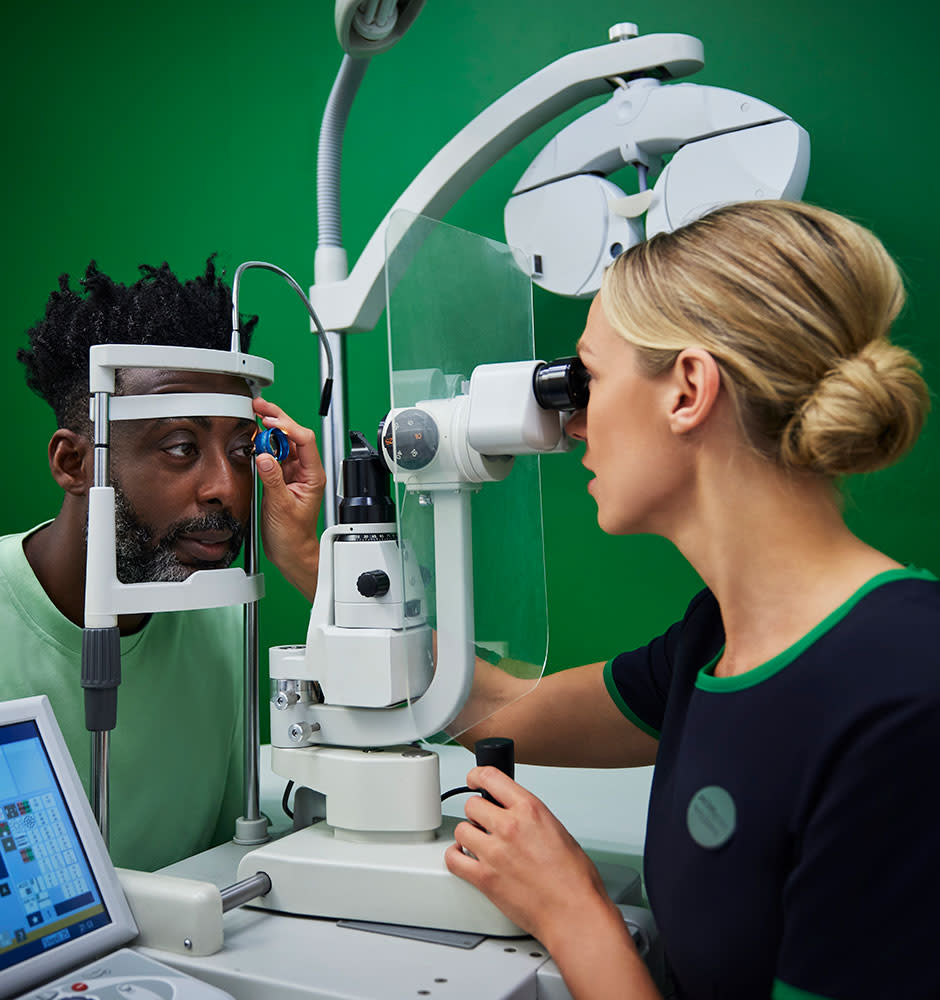
Do these symptoms sound familiar?
If you have experienced any of the symptoms mentioned above it's worth booking an appointment with one of our optometrists.
What causes glaucoma?
The eyeball contains a fluid called aqueous humour, which is constantly produced by the eye. Any excess fluid is drained from the eye through tiny channels and tubes. When the fluid cannot drain properly, pressure builds up in the eye.
Glaucoma typically develops when this increased pressure damages the optic nerve, which connects the eye to the brain, and harms the nerve fibres from the retina, the light‑sensitive nerve tissue that lines the back of the eye.
In acute glaucoma cases, this pressure rises rapidly to higher levels, even causing pain.
How is glaucoma treated?
You won’t feel glaucoma coming on, which is why testing is so important. We use a range of quick, painless checks to spot the early signs and get a clear picture of your eye health.
Eye pressure test (tonometry): This checks the pressure inside your eye – a key part of spotting glaucoma early. We use a gentle puff of air or a light‑touch probe to see how much pressure is building up. It’s over in seconds and helps us see whether your eye is holding on to more fluid than it should. High pressure doesn’t always mean you’ve got glaucoma, but it’s a sign worth watching.
Optic nerve check: We shine a light at the back of your eye to take a close look at your optic nerve, the part that connects your eye to your brain. Glaucoma damages this nerve over time, so we look for changes in its shape, colour or structure. It’s a simple check, but it tells us a lot.
OCT scan (Optical Coherence Tomography): Think of this like an ultrasound for your eye. It creates a detailed 3D image of the layers inside the back of your eye. We use it to spot thinning or damage in the nerve fibres, often before any sight is lost. It’s a quick, non‑contact scan that’s become a key part of early glaucoma diagnosis.
Visual field test: This checks what you can see at the edges of your vision, even when you’re looking straight ahead. You’ll look into a dome and press a button whenever you see small lights pop up. It helps us find blind spots or gaps in your side vision, which are common in glaucoma.
Gonioscopy: We use a small lens with a mirror to get a proper view of your drainage angle, the bit of your eye where fluid flows out. This helps us see if that angle is open or blocked, which tells us what type of glaucoma you might have. It’s done in the consulting room and only takes a few minutes.
Corneal thickness test (pachymetry): Your cornea, the clear front part of your eye, plays a part in your pressure reading. If it’s thicker or thinner than average, it can change how pressure shows up in tests. We use a quick, painless tool to check this and make sure we’re getting accurate results.
Optic disc cupping: The optic disc is the visible part of the optic nerve at the back of your eye. In glaucoma, it can start to hollow out – we call this cupping. We check for it using magnification and OCT scans. The more pronounced the cupping, the more pressure the nerve may be under.
Can glaucoma be prevented?
Glaucoma is a lifelong condition, but with the right care and regular checks, most people keep their vision stable. It can’t be reversed, but early treatment can stop things from getting worse. That’s why we recommend eye tests at least every two years, or more often if your optometrist advises it, especially if someone in your family has glaucoma.
Glaucoma UK
We're proud to work closely with the charity Glaucoma UK to help raise awareness of glaucoma and avoid preventable sight loss caused by the disease.
Our collaborations have included specialist glaucoma training for Specsavers colleagues so our teams can help people with glaucoma manage their condition, specifically helping people use eye drops.
Glaucoma FAQs:
Glaucoma is an eye condition where the optic nerve, which connects your eye to your brain, gets damaged. This usually happens because of a build‑up of pressure inside the eye. It often develops slowly and without symptoms at first, which is why regular eye tests are so important.
In the early stages, you probably won’t notice anything. But over time, symptoms of glaucoma might include tunnel vision, blurry vision, halos around lights or eye pain. If it isn’t treated, it can lead to sight loss.
Glaucoma can be caused by raised pressure inside the eye, poor blood supply to the optic nerve or damage from other eye conditions or injuries. Some types, such as secondary glaucoma, can also be caused by eye trauma, surgery or inflammation.
Yes. Your risk of developing glaucoma is higher if a close family member has it, such as a parent or sibling. If glaucoma runs in your family, your optometrist may recommend more regular checks from the age of 40.
There isn’t a cure for glaucoma, but it can be managed. Early treatment can help lower the pressure in your eye and prevent the damage from getting worse. Ongoing care is important to help keep your vision stable.
A glaucoma diagnosis involves a few different checks. These include an eye pressure test, an optic nerve exam, an OCT scan and a test to check your peripheral vision. Your optometrist or specialist will explain what each test is for and what the results show.
There are several types of glaucoma. The most common is primary open‑angle glaucoma, which develops slowly over time. Other types include angle‑closure, secondary and normal‑tension glaucoma. Some rare types, such as congenital glaucoma, affect babies and children.
Treatment often starts with daily eye drops that help lower the pressure inside your eye. In some cases, your ophthalmologist might recommend laser treatment or surgery. The right treatment depends on your eyes and how advanced the condition is.
Many people with glaucoma can continue driving, as long as their vision meets the legal standard. You might need regular field of vision tests to check this. If both eyes are affected, you must let the DVLA know.
Glaucoma usually progresses slowly, which is why regular eye checks are important. If left untreated, it can cause permanent vision loss over time. With the right care, the condition can often be kept under control.
Written by our experts for peace of mind

Ross Campbell
Related conditions
Not sure if this is what you’re experiencing? Explore some related conditions:
Blurry Vision
Blurry vision is not an eye condition itself, it’s usually a symptom of an underlying condition or a sign that your glasses or contact lenses may need updating.
Find out moreCloudy Vision
Often confused with blurry vision, cloudy vision is when objects appear ‘milky’ as if you’re looking through a cloudy piece of glass in one or both eyes.
Find out moreTunnel Vision
Tunnel vision is the worsening or loss of peripheral vision, the part of vision that lies beyond your direct line of sight, and can be temporary, or permanent.
Learn more
Find out more about eye care services
All eye conditions
Read more information about all eye conditions.
View all eye conditions
Book an eye test
Book an appointment at your local Specsavers store.
Book an eye test
All about eye tests
Everything you need to know about getting your eyes tested.
Find out more
NHS (2024) Glaucoma. Available at: Available at: https://www.nhs.uk/conditions/glaucoma/
Moorfields Eye Hospital NHS Foundation Trust (2024) Glaucoma. Available at: Available at: https://www.moorfields.nhs.uk/eye‑conditions/glaucoma
NHS England (2022) Making a decision about open‑angle glaucoma [PDF]. Available at: Available at: https://www.england.nhs.uk/wp‑content/uploads/2022/07/Making‑a‑decision‑about‑open‑angle‑glaucoma.pdf
NHS Gloucestershire Hospitals (2021) Chronic glaucoma [PDF]. Available at: Available at: https://www.gloshospitals.nhs.uk/documents/12557/Chronic_glaucoma_GHPI0595_04_21.pdf
Mayo Clinic (2024) Glaucoma – diagnosis and treatment. Available at: Available at: https://www.mayoclinic.org/diseases‑conditions/glaucoma/diagnosis‑treatment/drc‑20372846
American Academy of Ophthalmology (2024) Understanding glaucoma: symptoms, causes, diagnosis, treatment. Available at: Available at: https://www.aao.org/eye‑health/diseases/what‑is‑glaucoma
EyeWiki (American Academy of Ophthalmology) (2025) Primary open‑angle glaucoma. Available at: Available at: https://eyewiki.aao.org/Primary_Open‑Angle_Glaucoma
American Academy of Ophthalmology (2023) Glaucoma eye drops. Available at: Available at: https://www.aao.org/eye‑health/diseases/glaucoma‑eyedrop‑medicine
National Eye Institute (2024) Glaucoma. Available at: Available at: https://www.nei.nih.gov/learn‑about‑eye‑health/eye‑conditions‑and‑diseases/glaucoma
Centers for Disease Control and Prevention (2024) About glaucoma. Available at: Available at: https://www.cdc.gov/vision‑health/about‑eye‑disorders/glaucoma.html