
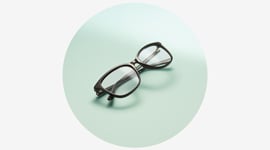

After the age of 40, when our eyes start to lose their ability to focus on near objects (known as presbyopia), single-vision glasses can be used to help with reading and close-up tasks
Are single-vision glasses right for me?
If you only need glasses for one type of vision, your optician may prescribe single-vision glasses to you. People under 40 usually have this type of lens as they’re more likely to have just one type of visual requirement.
If you’re presbyopic, you may need to have separate glasses for separate things, such as one pair for seeing far away, like when you’re driving, and one pair for close-up tasks, like reading.
Your optician will be able to recommend the best lens option to suit your needs.
What does single vision distance mean?
Single vision distance means that the lens only has one focal length.
So for example, if you couldn’t see the TV from the sofa on the other side of the room, you’d need a pair of glasses that had a single-vision prescription for distance vision in it so that you could see it clearly.
Or if you find your vision is blurry when you’re reading a book, you’d need a single-vision prescription for near distance to make your up-close vision clearer.

How much do single-vision lenses cost?
All of our glasses at Specsavers come with standard single-vision lenses, free.
They also come with a scratch-resistant treatment, case, and cloth. And you can choose to add a range of extra lens treatments and options that can protect or enhance your glasses.
Can you wear single-vision glasses all the time?
If you’re comfortable, then there’s no reason why you can’t wear your glasses as much as you want. There are some myths about this, with some people believing that wearing glasses all the time will damage your eyes, making them worse when you take them off – but this is just a myth. This is the same for all vision types, including glasses for long-sightedness, short-sightedness and astigmatism.
There are times when it’s better to take them off, like sleeping or high-impact sports, and for extra UV protection, you might want to try out some prescription sunglasses or reactions lenses to help keep your eyes protected when you’re outdoors
Got a copy of your prescription?
You can buy your next pair of single-vision glasses online.