'%3e%3cpath%20d='M706.453%20375.999C860.234%20375.999%20984.899%20291.829%20984.899%20188C984.899%2084.1703%20860.234%200%20706.453%200C552.671%200%20428.006%2084.1703%20428.006%20188C428.006%20291.829%20552.671%20375.999%20706.453%20375.999Z'%20fill='%23009B4F'/%3e%3cpath%20d='M278.447%20375.999C432.229%20375.999%20556.893%20291.829%20556.893%20188C556.893%2084.1703%20432.229%200%20278.447%200C124.665%200%200%2084.1703%200%20188C0%20291.829%20124.665%20375.999%20278.447%20375.999Z'%20fill='%23009B4F'/%3e%3cpath%20d='M141.484%20166.68C125.01%20162.158%20114.996%20158.927%20114.996%20150.529C114.996%20143.422%20122.102%20138.9%20133.085%20138.9C144.068%20138.9%20155.051%20143.099%20164.095%20150.529L164.418%20150.852L165.388%20129.855C156.666%20125.01%20147.944%20121.78%20133.731%20121.78C123.394%20121.78%20114.027%20124.364%20107.243%20129.209C99.8137%20134.378%2095.9374%20142.13%2095.9374%20151.175C95.9374%20168.941%20110.796%20176.694%20123.394%20179.924C140.192%20184.446%20151.821%20188.323%20151.821%20198.659C151.821%20207.381%20144.068%20212.872%20131.47%20212.872C118.872%20212.872%20106.274%20207.381%2096.5834%20198.013L96.2604%20197.69L94.3223%20219.979C104.336%20226.762%20116.934%20230.316%20130.501%20230.316C142.13%20230.316%20152.144%20227.408%20159.25%20221.917C167.003%20216.103%20171.202%20207.704%20171.202%20197.367C171.202%20181.862%20161.511%20171.848%20141.484%20166.68Z'%20fill='white'/%3e%3cpath%20d='M264.557%20188C264.557%20215.78%20246.467%20230.316%20225.471%20230.316C215.457%20230.316%20207.381%20226.762%20201.244%20221.271V253.896H182.186V146.976H201.244V156.02C207.704%20149.883%20216.103%20145.684%20226.763%20145.684C247.436%20145.36%20264.557%20160.22%20264.557%20188ZM245.498%20188C245.498%20172.494%20236.131%20162.158%20222.887%20162.158C214.811%20162.158%20207.058%20165.711%20201.567%20173.787V203.182C207.058%20210.288%20214.488%20213.841%20222.887%20213.841C236.131%20213.841%20245.498%20203.505%20245.498%20188Z'%20fill='white'/%3e%3cpath%20d='M352.095%20194.137H294.274C296.535%20207.058%20305.903%20213.841%20318.824%20213.841C329.807%20213.841%20337.882%20211.257%20346.604%20206.089L347.573%20222.886C339.82%20227.085%20330.13%20230.316%20317.532%20230.316C294.274%20230.316%20274.893%20215.78%20274.893%20188.323C274.893%20162.804%20294.274%20145.683%20317.209%20145.683C341.112%20145.683%20353.71%20160.22%20353.71%20181.216C353.71%20185.415%20353.064%20189.615%20352.095%20194.137ZM335.621%20178.632C335.621%20168.618%20329.161%20160.866%20317.532%20160.866C306.549%20160.866%20296.858%20168.295%20294.597%20180.893H335.298C335.621%20180.247%20335.621%20179.601%20335.621%20178.632Z'%20fill='white'/%3e%3cpath%20d='M443.189%20221.917L445.128%20203.505C452.88%20209.965%20463.54%20213.841%20474.846%20213.841C482.921%20213.841%20488.413%20210.611%20488.413%20204.797C488.413%20189.615%20444.482%20197.367%20444.482%20169.91C444.482%20153.436%20458.695%20145.36%20475.492%20145.36C487.444%20145.36%20496.488%20148.268%20503.272%20152.467L502.303%20169.587C494.227%20164.096%20484.213%20161.189%20475.492%20161.189C468.708%20161.189%20463.217%20163.773%20463.217%20168.941C463.217%20181.862%20507.471%20175.402%20507.471%20203.828C507.471%20221.271%20492.289%20229.993%20474.523%20229.993C461.602%20230.316%20450.942%20227.085%20443.189%20221.917Z'%20fill='white'/%3e%3cpath%20d='M590.488%20177.986V228.701H571.429V220.302C564.969%20226.439%20556.57%20229.993%20546.88%20229.993C528.467%20229.993%20517.484%20219.01%20517.484%20203.505C517.484%20187.03%20530.405%20177.017%20549.464%20177.017C556.57%20177.017%20563.677%20178.309%20571.752%20180.57V177.986C571.752%20165.388%20562.385%20159.897%20550.756%20159.897C542.034%20159.897%20532.02%20163.127%20524.914%20168.941L524.268%20152.467C530.405%20148.268%20541.711%20145.037%20554.309%20145.037C574.983%20145.36%20590.488%20155.374%20590.488%20177.986ZM571.429%20206.735V194.46C564.646%20192.199%20558.185%20190.907%20551.402%20190.907C541.711%20190.907%20535.574%20196.075%20535.574%20203.505C535.574%20210.934%20542.034%20215.78%20550.433%20215.78C558.508%20215.78%20564.969%20212.872%20571.429%20206.735Z'%20fill='white'/%3e%3cpath%20d='M592.104%20146.976H612.777L636.358%20198.659L659.616%20146.976H680.289L641.526%20228.701H630.866L592.104%20146.976Z'%20fill='white'/%3e%3cpath%20d='M754.907%20194.137H697.409C699.67%20207.058%20709.038%20213.841%20721.959%20213.841C732.941%20213.841%20741.017%20211.257%20749.739%20206.089L750.708%20222.886C742.955%20227.085%20733.264%20230.316%20720.667%20230.316C697.409%20230.316%20678.027%20215.78%20678.027%20188.323C678.027%20162.804%20697.409%20145.683%20720.343%20145.683C744.247%20145.683%20756.845%20160.22%20756.845%20181.216C756.522%20185.415%20756.199%20189.615%20754.907%20194.137ZM738.756%20178.632C738.756%20168.618%20732.295%20160.866%20720.667%20160.866C709.684%20160.866%20699.993%20168.295%20697.732%20180.893H738.433C738.433%20180.247%20738.756%20179.601%20738.756%20178.632Z'%20fill='white'/%3e%3cpath%20d='M826.618%20148.914L824.034%20166.357C819.511%20163.773%20814.989%20163.127%20810.467%20163.127C802.068%20163.127%20794.315%20167.326%20788.824%20176.371V228.701H769.766V146.976H788.824V157.958C794.315%20150.529%20802.068%20145.36%20812.728%20145.36C817.896%20145.36%20822.418%20146.653%20826.618%20148.914Z'%20fill='white'/%3e%3cpath%20d='M832.109%20221.917L834.048%20203.505C841.8%20209.965%20852.46%20213.841%20863.766%20213.841C871.841%20213.841%20877.333%20210.611%20877.333%20204.797C877.333%20189.615%20833.401%20197.367%20833.401%20169.91C833.401%20153.436%20847.615%20145.36%20864.412%20145.36C876.364%20145.36%20885.408%20148.268%20892.192%20152.467L891.223%20169.587C883.147%20164.096%20873.133%20161.189%20864.412%20161.189C857.628%20161.189%20852.137%20163.773%20852.137%20168.941C852.137%20181.862%20896.391%20175.402%20896.391%20203.828C896.391%20221.271%20881.209%20229.993%20863.443%20229.993C850.522%20230.316%20839.862%20227.085%20832.109%20221.917Z'%20fill='white'/%3e%3cpath%20d='M429.298%20206.412C422.838%20211.257%20416.054%20213.841%20408.302%20213.841C395.058%20213.841%20383.429%20204.474%20383.429%20188C383.429%20171.525%20395.058%20162.158%20408.302%20162.158C416.054%20162.158%20422.838%20164.742%20429.298%20169.264C430.268%20163.45%20431.237%20157.958%20432.852%20152.467C426.068%20148.591%20417.67%20145.683%20406.041%20145.683C382.783%20145.683%20363.725%20161.512%20363.725%20188C363.725%20214.487%20382.783%20230.316%20406.041%20230.316C417.67%20230.316%20426.068%20227.085%20432.852%20222.886C431.237%20217.395%20429.944%20211.903%20429.298%20206.412Z'%20fill='white'/%3e%3c/g%3e%3cdefs%3e%3cclipPath%20id='clip0_1478_9029'%3e%3crect%20width='984.9'%20height='375.999'%20fill='white'/%3e%3c/clipPath%3e%3c/defs%3e%3c/svg%3e)
Eye twitching occurs when the muscle in one (or both) of your eyelids spasms or blinks involuntarily. Below, we will explore what causes eye twitching, including both lifestyle factors and medical conditions, and the treatments available.
Experiencing pain, discomfort or a sudden change in your vision? Please call your local store and we’ll see you as soon as possible.
What is eye twitching?
Eye twitching, which refers to the involuntary movement of the eyelids, is usually a harmless eye condition that most people will experience at some point. A twitch in the eye usually passes quickly, but symptoms can range from mild, occasional movements to more persistent eye twitching that last for days or even weeks.

Common symptoms of eye twitching
In most cases, eye twitching is usually harmless and shouldn’t require medical attention. For many people, an eye twitch stops on its own and sometimes goes away without you really noticing it. However, it can feel uncomfortable and be highly distracting while it happens. Common symptoms of eye twitching include:
A flickering or fluttering sensation in the eyelid
A gentle tugging or pulling feeling around the eye
Repetitive, involuntary blinking or spasms every few seconds
Twitching that lasts for a few minutes, hours, or even days
Twitching in one eye (most common) or both eyes (less common)
Episodes that come and go, often without warning
Mild eye irritation or fatigue alongside the twitching
Causes of eye twitching
So, what actually causes eye twitching? If you notice this becoming a persistent or recurring issue, there are several factors that could be leading to or aggravating the condition.
Lifestyle causes of twitching eyes
Eyelid twitches can occur at any time in your life for no apparent reason, but certain lifestyle‑related factors can be what causes your eye to twitch or worsen the spasms, including:
Lack of sleep or tiredness: Prolonged periods of bad (or not enough) sleep may disrupt your body’s natural restorative process, causing eye muscles to struggle.
Dehydration: Not drinking enough water could affect the balance of electrolytes in your body, leading to muscle spasms, including those in the eyelids.
Feeling stressed or anxious: When you’re stressed, high cortisone levels can impact your body causing your eyes to twitch.
Eye strain: Prolonged screen time or focusing on a task, such as reading a book, for a long time can lead to eye strain and twitching.
Eye irritation: Allergies, such as hay fever, or exposure to smoke and wind can irritate your eyes.
Too much caffeine or alcohol: Stimulants like caffeine and alcohol can overstimulate the nervous system, potentially triggering muscle spasms in the eyelids.
Side effects of certain medications: Certain drugs and medications list eye twitching as a common side effect.
Eye injury: Trauma to the eye or eyelid can result in twitching.
Medical causes of eye twitching
Some nerve and brain disorders could could cause uncontrollable blinking or eye movement, such as:
Parkinson's disease
Tourette's syndrome
Bell's palsy
Multiple sclerosis
Hyperthyroidism
If an eye twitch is your only symptom, it’s unlikely that these conditions are the cause. However, we recommend getting in touch with a medical professional to rule them out if you're concerned.
Types of eye twitching
There are three types of eye twitches, ranging from mild and temporary to more severe and persistent types:
Myokymia: This is the most common type of eye twitching. The twitches may be subtle or quite intense, however, they will normally stop on their own after a few minutes.
Benign essential blepharospasm (BEB): This is a more severe form of eye twitching that starts off mild but can escalate, causing significant blinking that interferes with your ability to complete everyday tasks.
Hemifacial spasm: This is a form of neuromuscular disease. With this condition, you’ll experience contractions on one side of the face, including the eye, due to your facial nerve being irritated.

How to treat eye twitching
While this condition often resolves itself, our tips on how to stop eye twitching can help bring some more immediate relief:
At home treatment
Most eye twitches are harmless and can often improve on their own. However, if they don’t, you can treat your eye twitch with some simple treatments at home.
Warm compress: Try applying a warm compress to the affected eye for a few minutes to relax the muscles.
Eye drops: Consider over‑the‑counter treatments such as eye drops to treat underlying conditions such as dry eye.
Cold compress: If the eyelid feels sore or inflamed, use a cool compress to reduce discomfort.
Rest your eyes: Close your eyes and rest them, along with reducing prolonged screen time to give your eye muscles a break.
Medical treatment
If you’re getting stronger and more frequent eyelid spasms, you might need specialist medical treatment to stop the twitching.
Your treatment options might include:
Botulinum toxin injections: Botulinum toxin injections, such as Botox, are a common and effective treatment for benign essential blepharospasm (BEB). The toxin is injected into the affected muscles around the eyes, temporarily paralysing them and reducing eye spasms. The treatment typically lasts for several months before needing another dose but it can be expensive.
Oral medication: Some medications, such as muscle relaxants or anti‑seizure medications, can help reduce the frequency and severity of eyelid spasms.
Surgery: In acute cases of BEB that do not respond to other treatments, surgery, such as a myectomy – a procedure which involves removing some of the muscles responsible for eyelid spasms ‑ can be a good option.
Supportive therapies: Various supportive therapies, such as stress management techniques, relaxation exercises, or the use of tinted glasses or sunglasses to reduce light sensitivity, could help alleviate the symptoms of eye twitching.
When to see a medical professional about eye twitching
You should seek medical advice if your eye keeps twitching for extended periods, happens more frequently or the spasms spread to other parts of your face. You should also look out for other concerning symptoms such as:
Eye twitching that significantly affects your quality of life or ability to carry out everyday tasks.
A twitching eye that is accompanied by another symptom such as facial spasms, drooping eyelids, or changes in vision.
Pain, redness, swelling, or discharge in or around the eye.
Twitching after an eye injury or surgery.
History of neurological conditions like multiple sclerosis (MS) or Parkinson's disease.
Inability to control the eye twitching or worsening symptoms despite attempting self‑care measures.
In these instances, you should consult with an eye doctor or healthcare professional.

OCT Scans
Find out more about our optical coherence tomography (OCT) scans.
How to prevent eye twitching
Eye twitching can come on out of the blue and can’t always be avoided. However, there are multiple steps you can take that may reduce the chances of it happening. Here are some tips that could stop your eyes from twitching:
Get more sleep: Aim for 7‑9 hours of quality sleep each night to allow your eyes and body to rest and rejuvenate fully.
Stay hydrated: Drink plenty of water throughout the day, especially during hot and dry weather.
Limit your caffeine and alcohol intake: Be mindful of your intake and consider cutting back if you notice eye twitching after drinking lots of caffeine or alcohol.
Take regular screen breaks: If you spend hours staring at digital screens, like your computer, smartphone, or tablet, try and practice the 20‑20‑20 rule: every 20 minutes, take a 20‑second break to look at something 20 feet away. This can help reduce eye strain and prevent eye twitching.
Manage your stress levels: Taking regular breaks to relax and unwind could also help alleviate tension in the eyes and in turn reduce spasms. Prioritise stress management techniques, such as deep breathing, meditation, yoga, or mindfulness.
How to book a consultation for eye twitching
Eye twitching is usually a mild condition that can affect anyone.
If you experience eye twitching regularly, and are worried it might be something more serious, book an eye consultation with us. Simply choose your nearest store at a time that suits you best.
You can also Ask The Expert for non‑urgent help over live chat.


Got a question about eye twitching?
Take a look at the FAQs below, or for more advice, why not ask the expert?
FAQs
Eye twitches are usually very brief and last for a few seconds to a few minutes. Occasional episodes may last hours or days but typically resolve on their own. However, if you experience twitching that persists for weeks or becomes frequent, you should consult a medical professional and get the eye twitch checked out.
Most eye twitches often occur in just one eye and are usually harmless. While less common, both eyes can twitch at the same time and are typically triggered from fatigue, stress or eye strain. While occasional twitching in one or both eyes is not a cause for concern, if it worsens, especially if it affects both eyes, you should get your eyes checked by a healthcare professional to rule out any underlying issues.
Most eye twitching will go away on its own, but there are various lifestyle factors that can prevent your eye twitch. We recommend getting enough rest, managing stress levels and reducing your caffeine intake. Using eyedrops or a warm compress may also reduce the symptoms.
While eye twitching can be unsettling, by itself, it’s not typically a sign of a brain tumour. This condition is usually a harmless condition brought on by factors like stress, fatigue, or lifestyle choices rather than brain tumours.
But, if you are experiencing persistent or severe eye twitching alongside symptoms consistent with a brain tumour, you should consult a healthcare professional to get assessed.
On its own, a twitching eye is not usually a sign of a stroke. A stroke tends to involve more serious symptoms such as sudden numbness or weakness, especially on one side of the body, confusion, trouble speaking or vision problems in one or both eyes. If you think you are having a stroke, call 999 immediately.
About the author

Ross Campbell
Relevant guides and articles
Blepharitis
This is a common condition, accounting for about 1 in 20 eye problems. It’s not serious, but it can lead to other conditions like dry eye syndrome.
Find out moreHay Fever
A common cause of allergic rhinitis, hay fever is an adverse reaction to pollen that many people experience, particularly in the summer.
Find out moreSwollen Eye
Swollen or puffy eyelids can be caused by a number of things. Find out what you can do to relieve your symptoms, as well as when to seek help.
Find out more
Find out more about eye care services
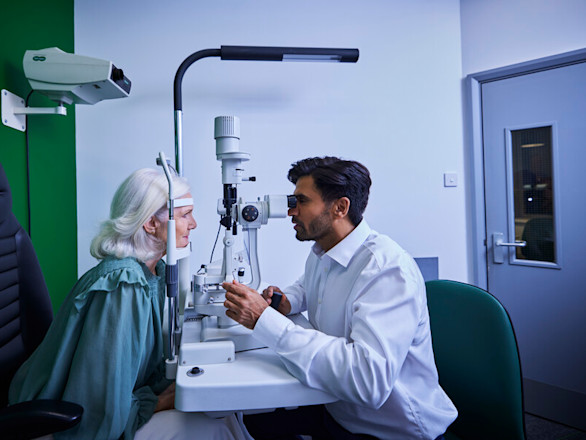
All eye conditions
Read more information about all eye conditions.
View all eye conditions
Book an eye test
Book an appointment at your local Specsavers store.
Book an eye test
All about eye tests
Everything you need to know about getting your eyes tested.
Find out more