'%3e%3cpath%20d='M706.453%20375.999C860.234%20375.999%20984.899%20291.829%20984.899%20188C984.899%2084.1703%20860.234%200%20706.453%200C552.671%200%20428.006%2084.1703%20428.006%20188C428.006%20291.829%20552.671%20375.999%20706.453%20375.999Z'%20fill='%23009B4F'/%3e%3cpath%20d='M278.447%20375.999C432.229%20375.999%20556.893%20291.829%20556.893%20188C556.893%2084.1703%20432.229%200%20278.447%200C124.665%200%200%2084.1703%200%20188C0%20291.829%20124.665%20375.999%20278.447%20375.999Z'%20fill='%23009B4F'/%3e%3cpath%20d='M141.484%20166.68C125.01%20162.158%20114.996%20158.927%20114.996%20150.529C114.996%20143.422%20122.102%20138.9%20133.085%20138.9C144.068%20138.9%20155.051%20143.099%20164.095%20150.529L164.418%20150.852L165.388%20129.855C156.666%20125.01%20147.944%20121.78%20133.731%20121.78C123.394%20121.78%20114.027%20124.364%20107.243%20129.209C99.8137%20134.378%2095.9374%20142.13%2095.9374%20151.175C95.9374%20168.941%20110.796%20176.694%20123.394%20179.924C140.192%20184.446%20151.821%20188.323%20151.821%20198.659C151.821%20207.381%20144.068%20212.872%20131.47%20212.872C118.872%20212.872%20106.274%20207.381%2096.5834%20198.013L96.2604%20197.69L94.3223%20219.979C104.336%20226.762%20116.934%20230.316%20130.501%20230.316C142.13%20230.316%20152.144%20227.408%20159.25%20221.917C167.003%20216.103%20171.202%20207.704%20171.202%20197.367C171.202%20181.862%20161.511%20171.848%20141.484%20166.68Z'%20fill='white'/%3e%3cpath%20d='M264.557%20188C264.557%20215.78%20246.467%20230.316%20225.471%20230.316C215.457%20230.316%20207.381%20226.762%20201.244%20221.271V253.896H182.186V146.976H201.244V156.02C207.704%20149.883%20216.103%20145.684%20226.763%20145.684C247.436%20145.36%20264.557%20160.22%20264.557%20188ZM245.498%20188C245.498%20172.494%20236.131%20162.158%20222.887%20162.158C214.811%20162.158%20207.058%20165.711%20201.567%20173.787V203.182C207.058%20210.288%20214.488%20213.841%20222.887%20213.841C236.131%20213.841%20245.498%20203.505%20245.498%20188Z'%20fill='white'/%3e%3cpath%20d='M352.095%20194.137H294.274C296.535%20207.058%20305.903%20213.841%20318.824%20213.841C329.807%20213.841%20337.882%20211.257%20346.604%20206.089L347.573%20222.886C339.82%20227.085%20330.13%20230.316%20317.532%20230.316C294.274%20230.316%20274.893%20215.78%20274.893%20188.323C274.893%20162.804%20294.274%20145.683%20317.209%20145.683C341.112%20145.683%20353.71%20160.22%20353.71%20181.216C353.71%20185.415%20353.064%20189.615%20352.095%20194.137ZM335.621%20178.632C335.621%20168.618%20329.161%20160.866%20317.532%20160.866C306.549%20160.866%20296.858%20168.295%20294.597%20180.893H335.298C335.621%20180.247%20335.621%20179.601%20335.621%20178.632Z'%20fill='white'/%3e%3cpath%20d='M443.189%20221.917L445.128%20203.505C452.88%20209.965%20463.54%20213.841%20474.846%20213.841C482.921%20213.841%20488.413%20210.611%20488.413%20204.797C488.413%20189.615%20444.482%20197.367%20444.482%20169.91C444.482%20153.436%20458.695%20145.36%20475.492%20145.36C487.444%20145.36%20496.488%20148.268%20503.272%20152.467L502.303%20169.587C494.227%20164.096%20484.213%20161.189%20475.492%20161.189C468.708%20161.189%20463.217%20163.773%20463.217%20168.941C463.217%20181.862%20507.471%20175.402%20507.471%20203.828C507.471%20221.271%20492.289%20229.993%20474.523%20229.993C461.602%20230.316%20450.942%20227.085%20443.189%20221.917Z'%20fill='white'/%3e%3cpath%20d='M590.488%20177.986V228.701H571.429V220.302C564.969%20226.439%20556.57%20229.993%20546.88%20229.993C528.467%20229.993%20517.484%20219.01%20517.484%20203.505C517.484%20187.03%20530.405%20177.017%20549.464%20177.017C556.57%20177.017%20563.677%20178.309%20571.752%20180.57V177.986C571.752%20165.388%20562.385%20159.897%20550.756%20159.897C542.034%20159.897%20532.02%20163.127%20524.914%20168.941L524.268%20152.467C530.405%20148.268%20541.711%20145.037%20554.309%20145.037C574.983%20145.36%20590.488%20155.374%20590.488%20177.986ZM571.429%20206.735V194.46C564.646%20192.199%20558.185%20190.907%20551.402%20190.907C541.711%20190.907%20535.574%20196.075%20535.574%20203.505C535.574%20210.934%20542.034%20215.78%20550.433%20215.78C558.508%20215.78%20564.969%20212.872%20571.429%20206.735Z'%20fill='white'/%3e%3cpath%20d='M592.104%20146.976H612.777L636.358%20198.659L659.616%20146.976H680.289L641.526%20228.701H630.866L592.104%20146.976Z'%20fill='white'/%3e%3cpath%20d='M754.907%20194.137H697.409C699.67%20207.058%20709.038%20213.841%20721.959%20213.841C732.941%20213.841%20741.017%20211.257%20749.739%20206.089L750.708%20222.886C742.955%20227.085%20733.264%20230.316%20720.667%20230.316C697.409%20230.316%20678.027%20215.78%20678.027%20188.323C678.027%20162.804%20697.409%20145.683%20720.343%20145.683C744.247%20145.683%20756.845%20160.22%20756.845%20181.216C756.522%20185.415%20756.199%20189.615%20754.907%20194.137ZM738.756%20178.632C738.756%20168.618%20732.295%20160.866%20720.667%20160.866C709.684%20160.866%20699.993%20168.295%20697.732%20180.893H738.433C738.433%20180.247%20738.756%20179.601%20738.756%20178.632Z'%20fill='white'/%3e%3cpath%20d='M826.618%20148.914L824.034%20166.357C819.511%20163.773%20814.989%20163.127%20810.467%20163.127C802.068%20163.127%20794.315%20167.326%20788.824%20176.371V228.701H769.766V146.976H788.824V157.958C794.315%20150.529%20802.068%20145.36%20812.728%20145.36C817.896%20145.36%20822.418%20146.653%20826.618%20148.914Z'%20fill='white'/%3e%3cpath%20d='M832.109%20221.917L834.048%20203.505C841.8%20209.965%20852.46%20213.841%20863.766%20213.841C871.841%20213.841%20877.333%20210.611%20877.333%20204.797C877.333%20189.615%20833.401%20197.367%20833.401%20169.91C833.401%20153.436%20847.615%20145.36%20864.412%20145.36C876.364%20145.36%20885.408%20148.268%20892.192%20152.467L891.223%20169.587C883.147%20164.096%20873.133%20161.189%20864.412%20161.189C857.628%20161.189%20852.137%20163.773%20852.137%20168.941C852.137%20181.862%20896.391%20175.402%20896.391%20203.828C896.391%20221.271%20881.209%20229.993%20863.443%20229.993C850.522%20230.316%20839.862%20227.085%20832.109%20221.917Z'%20fill='white'/%3e%3cpath%20d='M429.298%20206.412C422.838%20211.257%20416.054%20213.841%20408.302%20213.841C395.058%20213.841%20383.429%20204.474%20383.429%20188C383.429%20171.525%20395.058%20162.158%20408.302%20162.158C416.054%20162.158%20422.838%20164.742%20429.298%20169.264C430.268%20163.45%20431.237%20157.958%20432.852%20152.467C426.068%20148.591%20417.67%20145.683%20406.041%20145.683C382.783%20145.683%20363.725%20161.512%20363.725%20188C363.725%20214.487%20382.783%20230.316%20406.041%20230.316C417.67%20230.316%20426.068%20227.085%20432.852%20222.886C431.237%20217.395%20429.944%20211.903%20429.298%20206.412Z'%20fill='white'/%3e%3c/g%3e%3cdefs%3e%3cclipPath%20id='clip0_1478_9029'%3e%3crect%20width='984.9'%20height='375.999'%20fill='white'/%3e%3c/clipPath%3e%3c/defs%3e%3c/svg%3e)
What is conjunctivitis (pink eye)?
Conjunctivitis happens when the conjunctiva, the clear membrane covering the eye, becomes inflamed. Infection or irritation can increase blood flow, making the eye look pink or red.
Symptoms of conjunctivitis
While there are a few different causes of conjunctivitis, they often share similar symptoms. You may only get symptoms in one eye, or you might get them in both. Pink eye can start in one eye, but then spread to the other. Here are some of the most common signs of conjunctivitis we see at our stores in the UK:
Red or pink eye – This is the most obvious symptom of conjunctivitis. When your body tries to fight off an infection, it sends more blood to the affected area (this is known as inflammation). If the infection is in your eye, the blood vessels in the eye expand. This means the tiny veins in your eyes suddenly become much more visible.
A burning sensation – Inflammation can also make your eye feel warmer as more blood is flowing to the eye.
Watery eyes – If you have conjunctivitis, your eyes may produce more tears than usual, and they'll feel especially watery. If the pink eye is caused by an allergy or another irritant on the surface of the eye, this can help to flush it out.
Gritty feeling – You might notice you get a gritty sensation in your eye. This may be because the conjunctiva swells a little bit when it becomes inflamed. Learn more about the feeling of something in your eye.
Itchy eye – Your eye might feel especially itchy. This is particularly common if the conjunctivitis is caused by an allergy. Your body releases a substance called histamine, which makes blood vessels expand, and this can cause that itchy feeling.
Sticky or crusty eyelashes – You might get a sticky or crusty substance on your eyelashes, and it can feel like your eyes are stuck together when you wake up. This is particularly common with bacterial conjunctivitis. You might notice a yellow fluid called pus on your eyelashes.
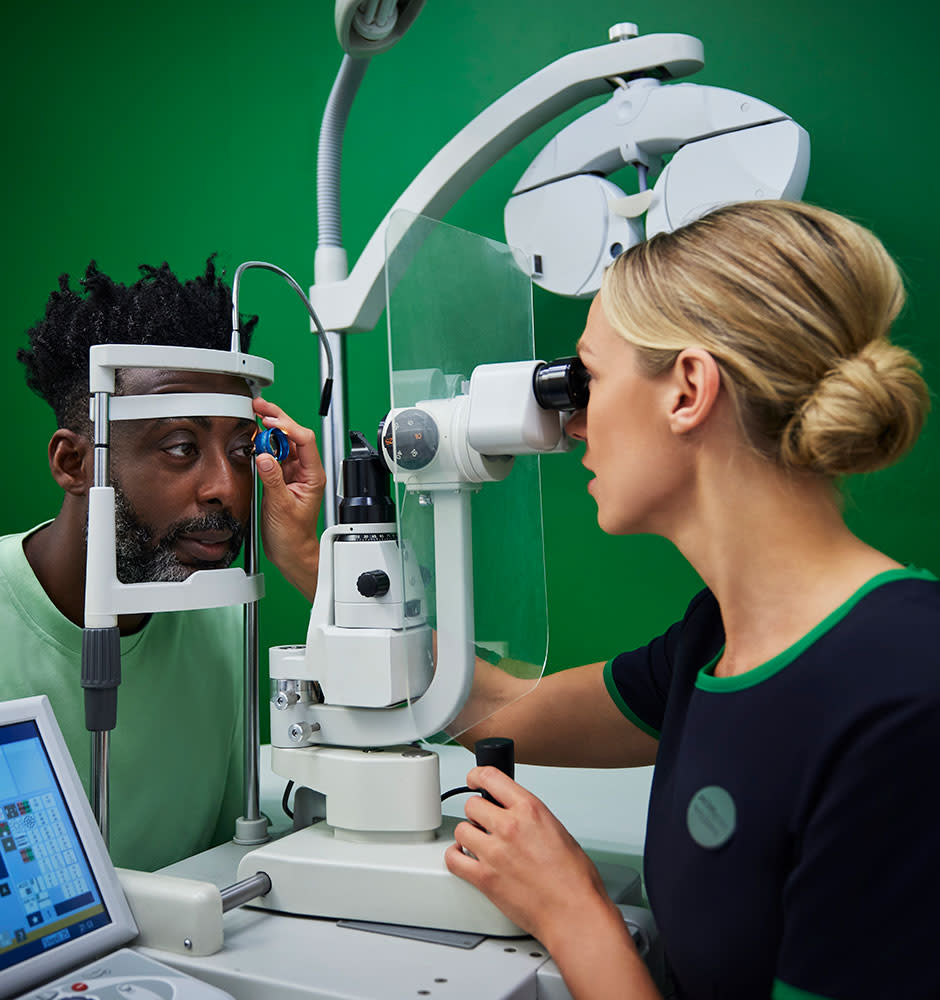
Do these symptoms sound familiar?
If you have experienced any of the symptoms mentioned above it's worth booking an appointment with one of our optometrists.
Causes of conjunctivitis
Conjunctivitis can have several causes, often linked to irritation.
Viruses
Most cases of conjunctivitis are caused by viruses, usually the same ones behind colds, like adenoviruses. If that’s the cause, you may get cold‑like symptoms too. Other viruses linked to pink eye conjunctivitis include herpes, chicken pox and COVID‑19.
Bacteria
Some bacteria that normally live on your skin or in your body can grow too much and cause pink eye conjunctivitis. It’s more common in children than adults.
Allergens
Pollen, pet hair and dust mites can trigger an allergic reaction that causes pink eye conjunctivitis. This often leads to swelling, itching and redness.
Chemicals
Things like shampoo, cleaning products or eye makeup can irritate your eyes and lead to pink eye conjunctivitis.
Fungal infections
Fungal conjunctivitis is rare, but it can happen. It’s usually caused by fungi getting into the eye through damage, dirty contact lenses or plant material.
Autoimmune disorders
An autoimmune disorder occurs when your body's immune system mistakenly attacks itself. Some autoimmune disorders, like lupus and Sjögren's syndrome, can cause pink eye conjunctivitis.
Blocked tear duct
For some newborn babies, a blocked tear duct can also cause pink eye conjunctivitis. It usually resolves on its own, but you should let the midwife, the GP or a health visitor know.
How is conjunctivitis diagnosed?
Conjunctivitis often clears up on its own in a week or two, so you don’t usually need to see a doctor. But if your symptoms are bothering you, speak to your optometrist, GP or pharmacist. They’ll ask about your symptoms and check your eyes to see if it’s conjunctivitis or something else. Sometimes they might take a swab to send to a lab. They can also recommend ways to ease your symptoms and help your eyes feel better.
Conjunctivitis in children (advice for parents)
Pink eye is quite common in children, particularly in those under five, and is usually caused by an infection or allergy.
What should I do if my child has conjunctivitis?
Treatment isn’t usually necessary for children with conjunctivitis, so home treatment will usually do the trick. That involves gently cleaning the affected eye or eyes with cotton balls soaked in cooled, boiled water.
It’s also important to make sure everyone in the household regularly washes their hands, and your child doesn’t share any towels or pillowcases to prevent it from spreading to other family members.
If symptoms get more severe (eye pain, sensitivity to light, changes in vision, headache, vomiting, blisters on the skin around the eye) or last longer than two weeks, then you should take them in to see their GP as soon as possible.
Can my child go to school with conjunctivitis?
Advice on this can vary by area but according to official advice from Public Health England, there’s no need to take your child out of school if they have conjunctivitis. Just make sure to remind your child not to rub their eyes and to regularly wash their hands.
The only time it might be necessary to take them out of school is if there is a wider outbreak of infective conjunctivitis at their school. It’s also worth noting that some schools have policies in place around conjunctivitis, for example, staying off school for 24‑48 hours – so it’s best to give them a call to check.
When should I seek advice?
You should take your child to see their optician, GP or pharmacist if:
They’ve had symptoms and sticky eyes for longer than two weeks
They have increasing irritation or uncomfortable eyes for longer than two days.
You should seek immediate advice from your optician, GP, pharmacist or NHS 111 (or equivalent) if:
They’re under four weeks old
They have painful symptoms
They’re very sensitive to light (photophobia)
Their vision is blurry
They have a rash
You think there might be something in their eye
They have a bad headache and keep being sick.
Treatment of conjunctivitis
At Specsavers, we'll decide how to treat conjunctivitis based on the severity of your symptoms and the underlying cause. Very often, pink eye conjunctivitis will just clear up by itself within a couple of weeks. Often, no treatment is necessary. But if it's lasting longer or is causing you a lot of discomfort, there are quite a few options available.
Home remedies for conjunctivitis
Home remedies are often a good first step for treating pink eye conjunctivitis. They can often be very effective.
Don't wear contact lenses – If you wear contact lenses, it’s best not to irritate your eyes any further, so avoid wearing them while you have symptoms and wear your specs instead.
Avoid rubbing your eyes – Conjunctivitis can make your eyes itchy and sore, so it's natural to want to rub them. But this won't resolve the issue and can cause more damage and irritation to your eyes.
Clean your eyelashes – Use warm water and cotton wool to gently clean sticky eyelids and lashes. Avoid soaps or chemicals – warm water is usually enough.
Avoid allergens – If pollen, pet hair or dust mites trigger your conjunctivitis, try to avoid them. Keep pets out of the bedroom and clean regularly to reduce dust mites.
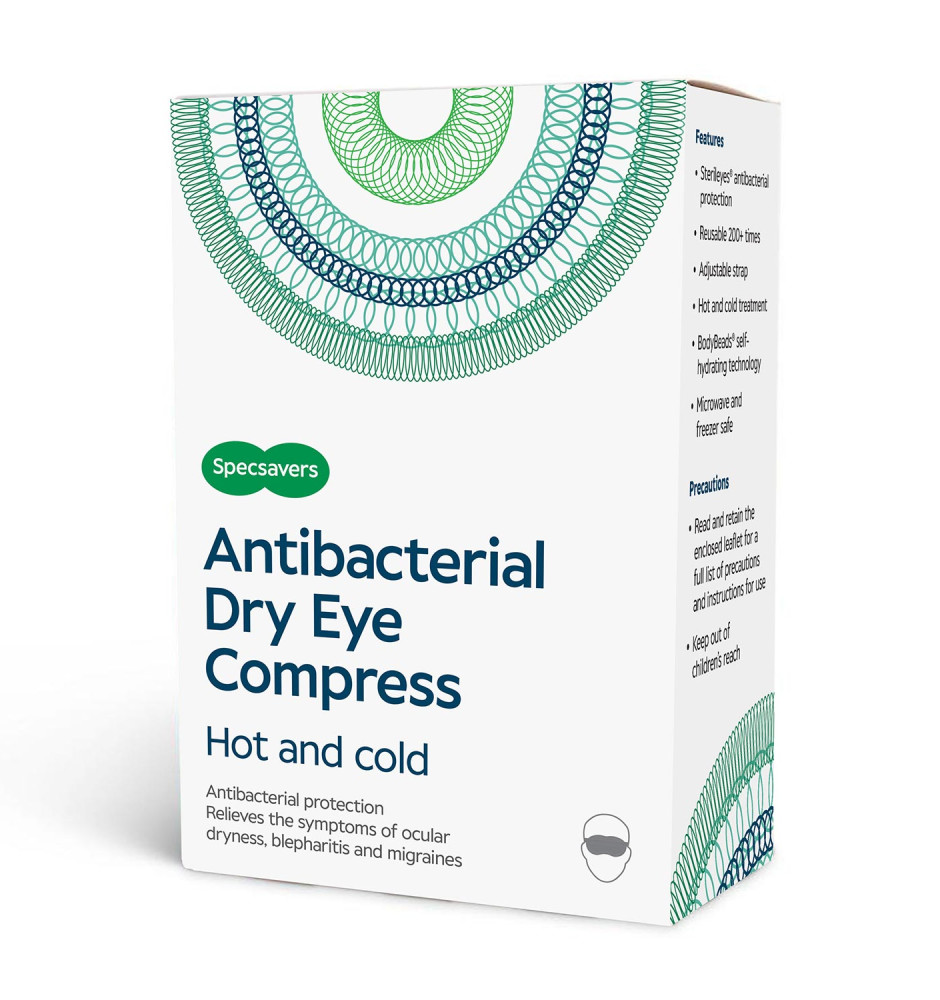
Antibacterial Dry Eye Compress
Our Antibacterial Compress can relieve symptoms of styes, blepharitis, dry eyes, migraines or headaches and more.
Over‑the‑counter relief
There are a few kinds of products that can help relieve conjunctivitis symptoms. You can find these at Specsavers stores or at many local pharmacies:
Antihistamines – Taken as pills or eye drops, they block histamine and help with allergy‑related pink eye conjunctivitis.
Artificial tears – Over‑the‑counter artificial tears can relieve the symptoms of inflammation (such as heat or soreness).
Eye compresses – Eye masks can be used both hot and cold. You place them over your eyelids, and this can relieve symptoms of itchiness, soreness and inflammation. We offer a range of antibacterial eye compresses and heat masks at Specsavers stores.
Eyelid wipes – Available as wipes or solutions that you apply with a cotton pad, eyelid wipes can help to gently remove built‑up pus and crust on your eyelids. We provide a range of wipes and solutions at our stores.
More medical treatments
If your conjunctivitis doesn't clear up within a couple of weeks, speak to your optometrist or GP. They may advise using more advanced treatments:
Antibiotics – If bacteria are behind your pink eye conjunctivitis, antibiotics (as pills or eye drops) can help. Always finish the full course, even if you start to feel better.
Antivirals – Most viral pink eye conjunctivitis clears up on its own. But if it’s caused by herpes, chickenpox, shingles or an STI, your GP or a specialist independent prescriber optometrist may prescribe antiviral treatment.
Immunosuppressants – If your conjunctivitis is caused by an autoimmune disorder (this is quite rare), then your doctor may prescribe you with immunosuppressants. These stop your body's immune system from attacking itself.

Blephasol Duo eye drops
Eyelid wipes and solutions prevent and relieve symptoms of eye conditions like blepharitis and conjunctivitis.
Can I prevent conjunctivitis?
You can reduce your chances of getting conjunctivitis by using the following steps. If you already have viral or bacterial conjunctivitis, you should also bear these ideas in mind so you can reduce the chances of spreading it to others.
Consider time off – Viral conjunctivitis spreads easily, so a few days off work or school might help stop it from passing on, especially in young children.
Good hygiene – Wash your hands often and avoid sharing towels or close contact. This helps stop pink eye spreading, especially during an outbreak.
Allergy management – Antihistamines help, but it’s best to avoid triggers. Keep pets out of the bedroom, clean often, and during pollen season, close windows and stay in on high pollen days.
Avoid eye irritants – Bin old eye makeup, wear eye protection with chemicals, and use mild products in the shower – rinsing suds away quickly.
Stopping the spread of pink eye conjunctivitis among children
If a child has conjunctivitis, they don't always need to take time off school. Often, its spread can be prevented with simple hygiene: regular handwashing, not sharing towels and regular cleaning of shared items (like toys or pens). That said, younger children may not understand why they can't share items or take part in physical play. If so, it may be best to keep them out of school until they're better.
FAQs
Pink eye Conjunctivitis will usually clear up in 1‑2 weeks without the need for treatment. In some cases, viral conjunctivitis can take longer to clear up.
The viral and bacterial types of conjunctivitis are contagious and they spread through coughs, sneezes and contact with things like pillowcases, towels and tissues. So it’s important to keep your mouth covered when sneezing or coughing, regularly washing your hands and avoid sharing pillows and towels while you have it to avoid passing it on to someone else.
Conjunctivitis usually stays contagious for as long as you have symptoms, especially if you have any kind of eye discharge.
No, we would generally advise against going swimming if you have conjunctivitis. Bacterial and viral types of conjunctivitis are extremely contagious, and it's still possible to spread the infection to others using the swimming pool, even if the water is chlorinated or you are wearing goggles. Pink eye can spread during activities in the water, as well as through shared objects such as towels, sunscreen and goggles.
Swimming in certain conditions may also worsen your conjunctivitis. For instance, chlorine is a chemical irritant that can increase the discomfort caused by conjunctivitis. It also washes away the tear film that protects your eyes and keeps them moist and protected from further infection.
Most of the time, your body will get rid of conjunctivitis on its own. Your immune system can normally fight off most kinds of bacterial and viral conjunctivitis very effectively. You can help your body to get rid of conjunctivitis by avoiding anything that might irritate your eye and getting plenty of rest. If it's not getting any better after a few days, book an appointment with your doctor. They will know how to get rid of conjunctivitis using medicine.
It really depends on the type of conjunctivitis you have, your symptoms, and the sort of work you do. Viral conjunctivitis is usually the most contagious, and you may be coughing and sneezing often. In some workplaces, this means you could easily spread it to other people, so it might be best to stay at home till you're better. On the other hand, allergic conjunctivitis cannot be spread to others, so it needn't stop you from going to work.
Conjunctivitis is the medical term for inflammation of the conjunctiva (a transparent membrane over your eyes). Pink eye is a non‑medical term that people often use to describe conjunctivitis (since one of the main visible symptoms is swelling off the veins in your eyes, meaning they look pink).
They can both be used, and optometrists at Specsavers will know what you mean if you use the term 'pink eye'. The only issue with 'pink eye' is that people might use it to describe other conditions that aren't actually conjunctivitis, and this can cause confusion.
Yes, most kinds of conjunctivitis go away by themselves within 1‑2 weeks. If your symptoms haven't disappeared after two weeks, contact your GP or visit your optometrist.

We’re on a mission to END the 50% of avoidable sight and hearing loss
That's why Newmedica surgical centres are part of the Specsavers family, offering direct and affordable access to consultant led, specialist eye treatment from consultants who specialise in Cataracts, Glaucoma, Macular, Vitreoretinal and Oculoplastic services.
Written by our experts for peace of mind

Ross Campbell
Related conditions
Not sure if this is what you’re experiencing? Explore some related conditions:
Iritis
Iritis, or anterior uveitis, is an inflammation of the iris – the coloured part of your eye that controls the size of your pupil.
Find out moreBlepharitis
This is a common condition, accounting for about 1 in 20 eye problems. It’s not serious, but it can lead to other conditions like dry eye syndrome.
Find out moreBloodshot Eyes
A red, bloodshot eye normally occurs when the blood vessels on the surface of the eye (the conjunctiva) expand.
Find out more
Find out more about eye care services

All eye conditions
Read more information about all eye conditions.
View all eye conditions
Book an eye test
Book an appointment at your local Specsavers store.
Book an eye test
All about eye tests
Everything you need to know about getting your eyes tested.
Find out more
Cleveland Clinic (2024) Pink eye. Available at: https://my.clevelandclinic.org/health/diseases/pink‑eye‑conjunctivitis
Mayo Clinic (2025) Pink eye. Available at: https://www.mayoclinic.org/diseases‑conditions/pink‑eye/symptoms‑causes/syc‑20376355
Medical News Today (2023) How long is pink eye contagious? Available at: https://www.medicalnewstoday.com/articles/321551
Ministry of Defence (2010) Eye Infections. Available at: https://assets.publishing.service.gov.uk/media/5a7db43140f0b65d8b4e2fd4/eye_infections_20.pdf
Moorfields Eye Hospital (2025) Conjunctivitis. Available at: https://www.moorfields.nhs.uk/eye‑conditions/conjunctivitis
NHS (2025) Conjunctivitis. Available at: https://www.nhs.uk/conditions/conjunctivitis/
Solando, D., et al. (2023) Viral conjunctivitis. Available at: https://www.ncbi.nlm.nih.gov/books/NBK470271/