

So you’ve chosen an amazing pair of frames – they’re going to look great on you, But there’s another decision to make: what type of lenses will go in those beautiful frames? The best lens for you depends on your lifestyle, your job and your vision needs, as well as your individual preferences. Our glasses lenses guide will make everything clear for you.
Types of glasses lenses at Specsavers
Single-vision glasses lenses
This glasses lens contains one single prescription, usually to correct either long- or short-sightedness. It’s for people who need glasses for driving, reading or computer use. Our single-vision glasses lenses come as standard with every frame at no extra cost.
Bifocal glasses lenses –
from £50
If you need separate glasses for distance vision and reading, then bifocal lenses could be for you. They contain two different prescriptions, usually for distance and close-up vision. So you won’t need to switch between two pairs of glasses.
Varifocal glasses lenses –
from £40
Varifocals contain multiple prescriptions in the lens for viewing close up, far away and everything in between. Whether you’re shopping, driving or reading, they give you clear vision at any distance.
Occupational glasses lenses –
from £80
Occupational glasses lenses are a step up from reading glasses. They allow the wearer to see both close up and a bit further away, which is something basic reading glasses can’t do.
SuperBoost lenses
SuperBoost is a lens type for people who have been diagnosed with the early signs of presbyopia, but who are not yet ready for a varifocal lens. A useful stepping stone to multifocal lenses that will help with reading etc in the meantime.
SuperSingle vision lenses
SuperSingle vision lenses are designed to give you exceptional clarity and comfort, all day long. They’re our most advanced single vision lens, tailored to your prescription and frames for how you want to see the world.
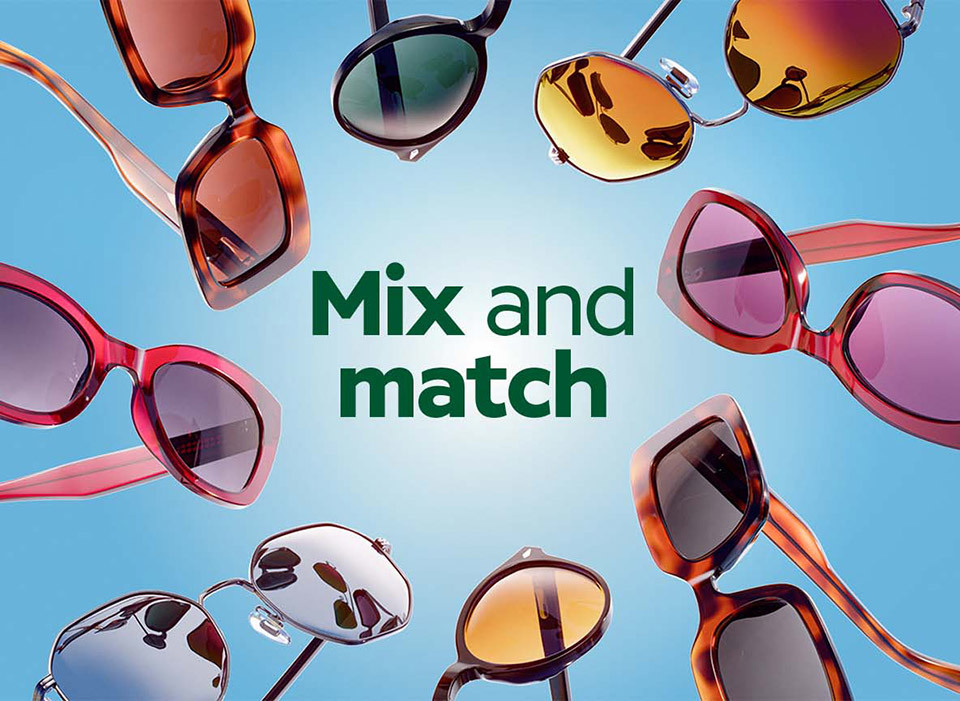
Save £40 on Lens Treatments
Your frames, your way. Personalise your look with custom tints or transitions and enjoy £40 off our range of lens treatments.
Extras and accessories
Glasses lens extras and treatments
Our glasses lenses always include a scratch-resistant treatment as standard. But we’ve also got a great range of extras and treatments that will help to protect or enhance
your lenses.
Accessories
We’ve got a great range of accessories to buy in store that are designed to keep your specs in tip-top condition, plus products to help with your eye health like eye masks and drops.
Buyer’s guide
Our buyer’s guide is everything you need to know before choosing a pair of glasses, including the best frames for your face shape. Get clued up in no time.