

Understanding Frame Measurements
If you look on the inside of your glasses, you’ll find a number that looks like: 52 18 135. This information shows you the size of your glasses: the lens diameter, the bridge width and the side length — all measured in millimetres.
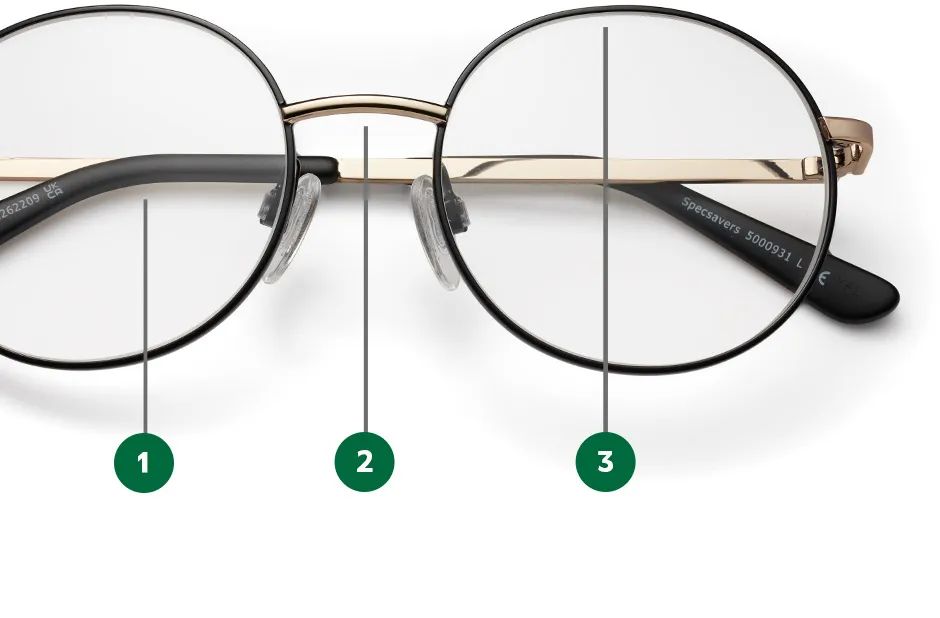
Parts of the frame
The length of the side is usually one of three standards — 135, 140 or 145mm. The side should be long enough to sit comfortably over your ears. Glasses with straight sides all the way to the end don't always have this measurement indicated.
The bridge width is the gap above your nose between the lenses. It's important that this is comfortable — too tight, and the glasses could pinch your nose; too loose and the glasses won't be stable on your face.
The lens diameter is the width of the lens (in mm), measured from the bridge. The size of your lenses can be a matter of personal choice, but it's also determined by your frame style, size and prescription.
What are the different glasses sizes?
At Specsavers we understand that every face is different. That’s why we have designed glasses frames in a family of sizes so that all faces — from petite to broad — can find their perfect match.
Each of our product pages contain the specific frame measurements individual to that particular glasses frames.
Frame sizing guide:
| Customer size | Ladies (mm) | Mens (mm) |
|---|---|---|
| XS | < 48 | < 50 |
| S | 48-50 | 50-51 |
| M | 51-53 | 52-54 |
| L | 54-56 | 55-57 |
| XL | 56 > | 57 > |

Understanding how glasses fit
Understanding how your glasses should fit can help when you come to shop for a new pair of specs, especially if you are looking to buy glasses and sunglasses online.
We’ve put together a quick run-down to help you pick the most comfortable glasses for you:
The top of your frames should be no higher than the line of your eyebrows and the width of the frames shouldn’t be wider than the overall width of your face at the temples.
Getting the right bridge design and position is key to a comfortable fit, you can check this by using our virtual try-on tool or visiting your local store.
The lower edge of the frames shouldn’t sit on your cheeks, otherwise they might rub or irritate.
The size should be in proportion to your face. If you have a small face, choose smaller glasses frames and vice versa.